ROHR2fesu
ROHR2fesu is an optional ROHR2 module for finite element analysis of local areas in piping and vessels. It transforms selected parts of the global model into shell element substructures, allowing stiffness, deformation and stress to be assessed in critical components without rebuilding the system separately.
ROHR2fesu supports the detailed analysis of branches, nozzles, fittings, bends, reinforcements and non-standard components. Parametric model generation, automatic meshing and direct load transfer from ROHR2 simplify the assessment of stress concentrations and complex local conditions.
It is designed for engineers, designers and specialists involved in the structural verification of piping and pressure vessels. It is particularly suitable for engineering companies, plant manufacturers, component suppliers and organizations that need to assess geometries not adequately represented by simplified methods.
- Industrial plant engineering
- Oil & Gas
- Energy
- Chemical and petrochemical
- Pharmaceutical
- Water treatment
- Pressure vessel manufacturing
- Mechanical engineering
- Thermal power plants
- Process plants
Benefits
Detail
Local FEM analysis assesses stresses, deformation and stiffness in critical components with a higher level of insight than simplified calculation methods.
Integration
Shell substructures remain connected to the global ROHR2 model, keeping geometry, operating conditions, loads and calculations fully coordinated.
Automation
The initial model, connecting elements and mesh are generated automatically from the segment selected within the complete piping system.
Accuracy
Stress distribution is calculated directly on the local geometry, making it possible to identify concentrations and the most highly stressed or deformed areas.
Speed
Parametric modelling and automatic load transfer reduce manual operations and accelerate the preparation of detailed finite element assessments.
Flexibility
Combinable superelements represent piping, fittings, nozzles, reinforcements and special geometries, adapting the model to the actual characteristics of each component.
Compliance
Stresses can be assessed according to EN 13445, ASME Section VIII Division 2 and AD S4, supporting different international regulatory requirements.
Optimization
Geometries, thicknesses, fillets can be modified and recalculated to compare configurations and improve the structural behaviour of components.
Documentation
Results, deformation and utilization levels are displayed graphically and collected in updatable reports, simplifying analysis, comparison and sharing.
Features
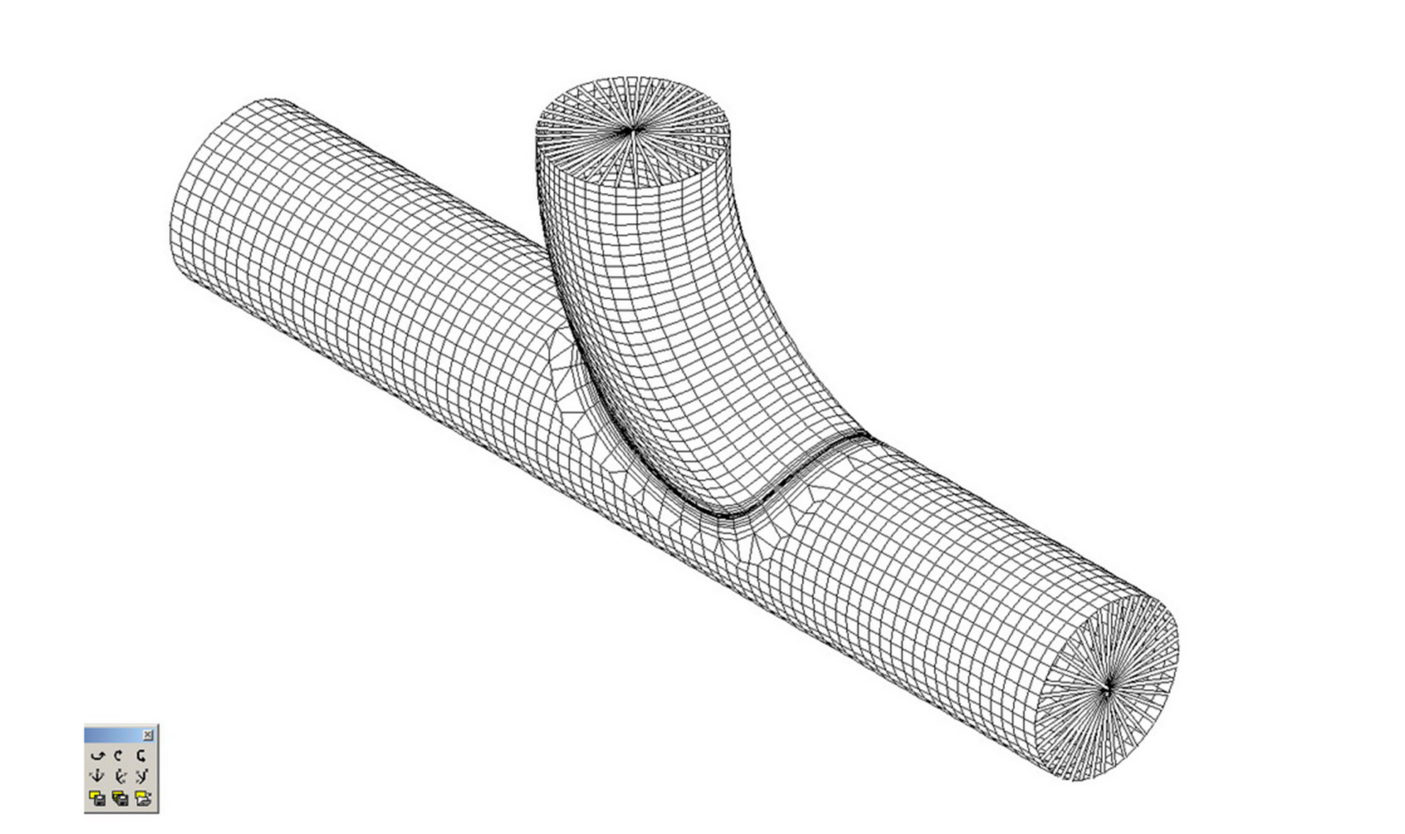
Mesh generation
Parametric geometry is automatically divided into shell elements, with the option to control and modify mesh resolution in the most critical areas.
Stress analysis
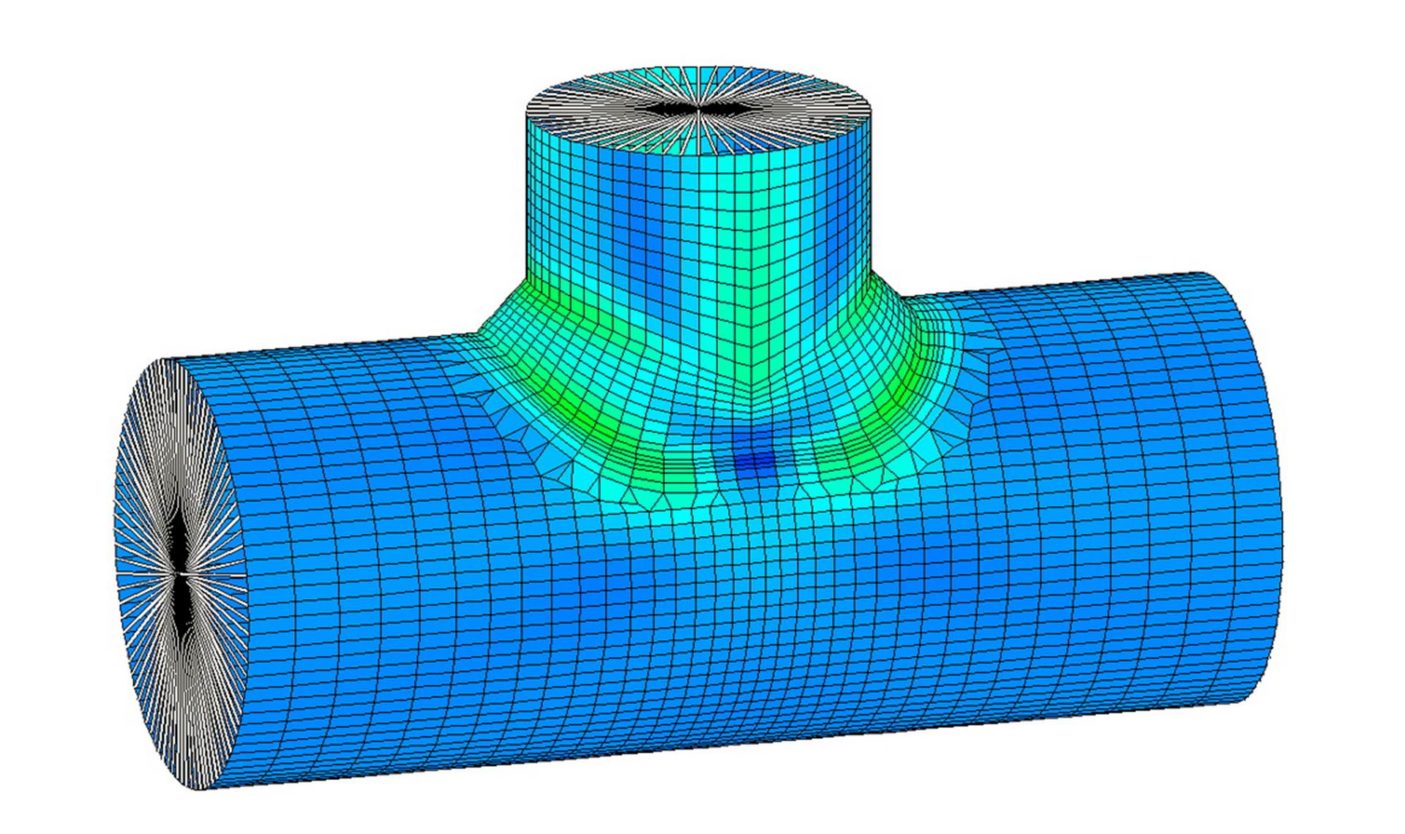
Colour scales and graphical representations show stress distribution, deformation and utilization levels, helping identify local concentrations.
Capabilities
- FEM analysis with shell elements
- Full integration with ROHR2
- Parametric modelling
- Automatic mesh generation
- Mesh resolution control
- Automatic load transfer
- Stress and deformation analysis
- Graphical result visualization
- Automatic report generation
- Superelement library
- Modelling of bends and fittings
- Modelling of nozzles and branches
- Analysis according to EN 13445, ASME VIII Div. 2 and AD S4
- Management of reinforcements, fillets and non-standard geometries
- Integration of substructures into the global piping model