ROHR2
ROHR2 is CAE software for modelling, calculating, and verifying stresses in piping systems and connected steel structures. It combines static and dynamic analyses, checks according to leading international standards, graphical result visualization, and technical documentation in a single working environment.
ROHR2 evaluates the behaviour of piping systems subjected to pressure, weight, temperature changes, seismic actions, water hammer, and other static or dynamic loads. The software calculates displacements, stresses, support reactions, and component loads, automatically comparing the results with the limits established by the selected standards.
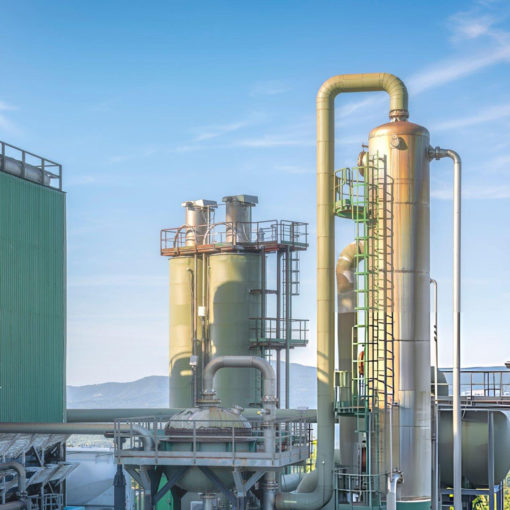
It is designed for engineers, designers, and companies involved in stress analysis, piping design, industrial plants, and structural verification. It supports piping specialists, EPC contractors, plant operators, inspection bodies, and companies working in the energy, chemical, petrochemical, and infrastructure sectors.
- Industrial plants
- Power generation
- Nuclear power
- Oil & Gas
- Chemical and petrochemical
- Gas transmission networks
- District heating
- Buried piping
- Offshore
- Inspection and certification bodies
Benefits
Precision
The calculation considers geometry, materials, loads, and operating conditions to provide accurate results for the behaviour of even the most complex piping systems.
Compliance
Verifications follow numerous international standards for industrial, nuclear, offshore, buried, plastic piping systems, and connected steel structures.
Automation
Load cases, combinations, and verification equations are generated automatically according to the selected standard, reducing repetitive manual operations.
Control
Displacements, stresses, and loads on supports, components, and nozzles can be analysed graphically and numerically throughout every verification phase.
Clarity
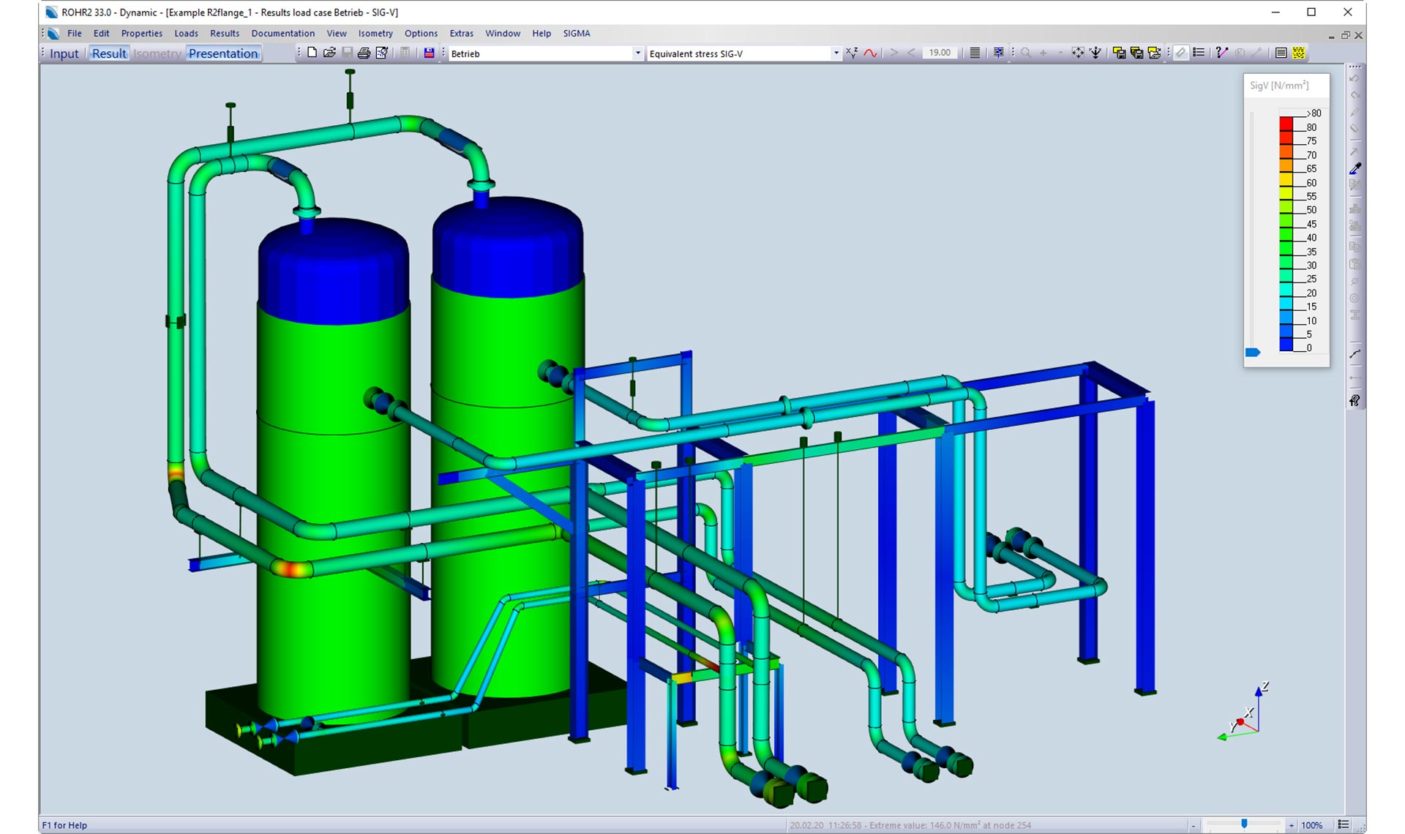
Three-dimensional models, colour scales, tables, and diagrams make results easier to interpret and highly stressed areas quicker to identify.
Flexibility
Static, dynamic, and seismic analyses allow different operating conditions, load combinations, and linear or nonlinear behaviours to be investigated.
Integration
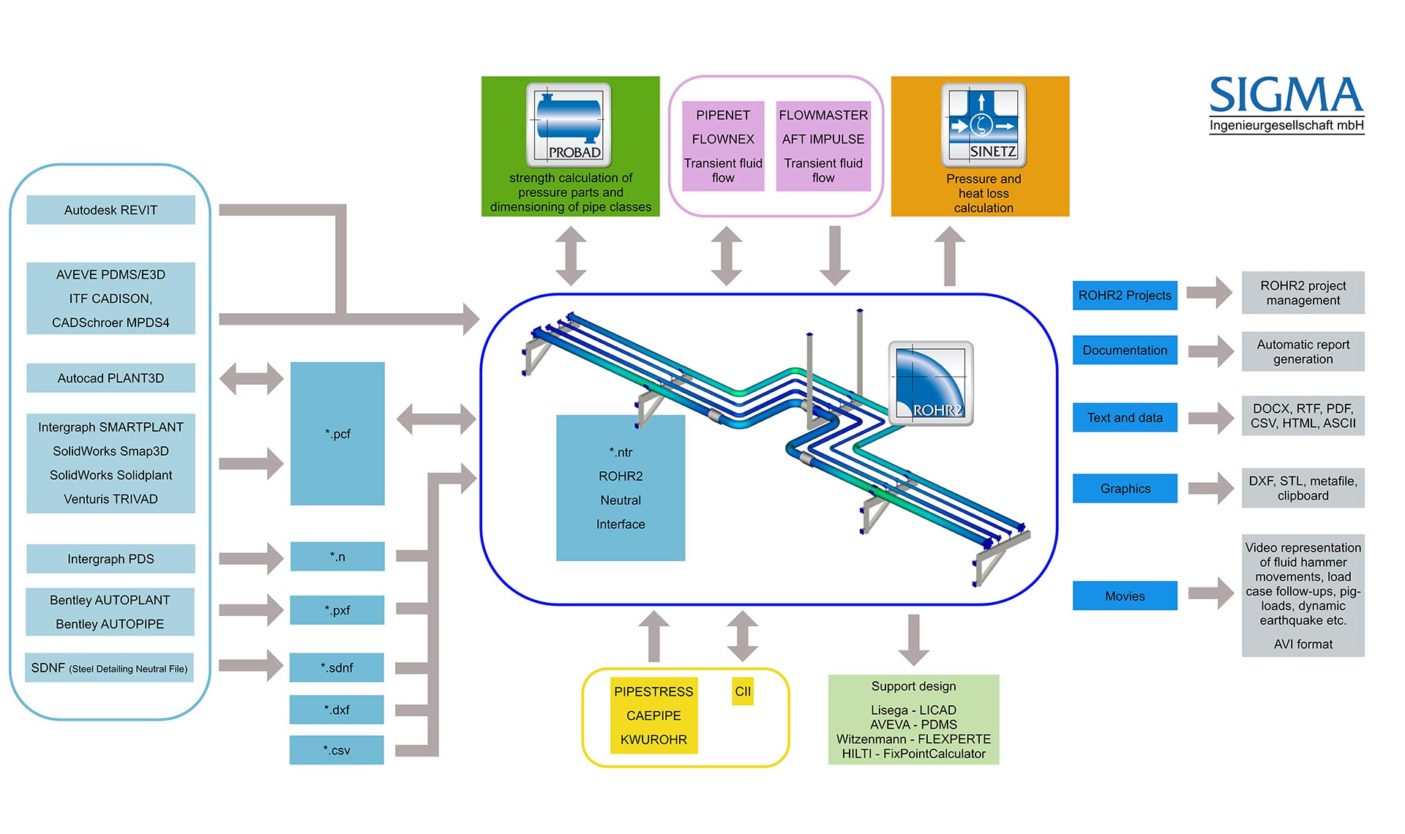
CAD and CAE interfaces simplify the transfer of geometries and data, integrating ROHR2 into existing engineering and design workflows.
Efficiency
Integrated databases, automated verifications, and post-processing tools reduce the time required to set up, calculate, and document analyses.
Reliability
Input data controls, code-based verifications, and complete documentation make the calculation process traceable, repeatable, and easy to review.
Features
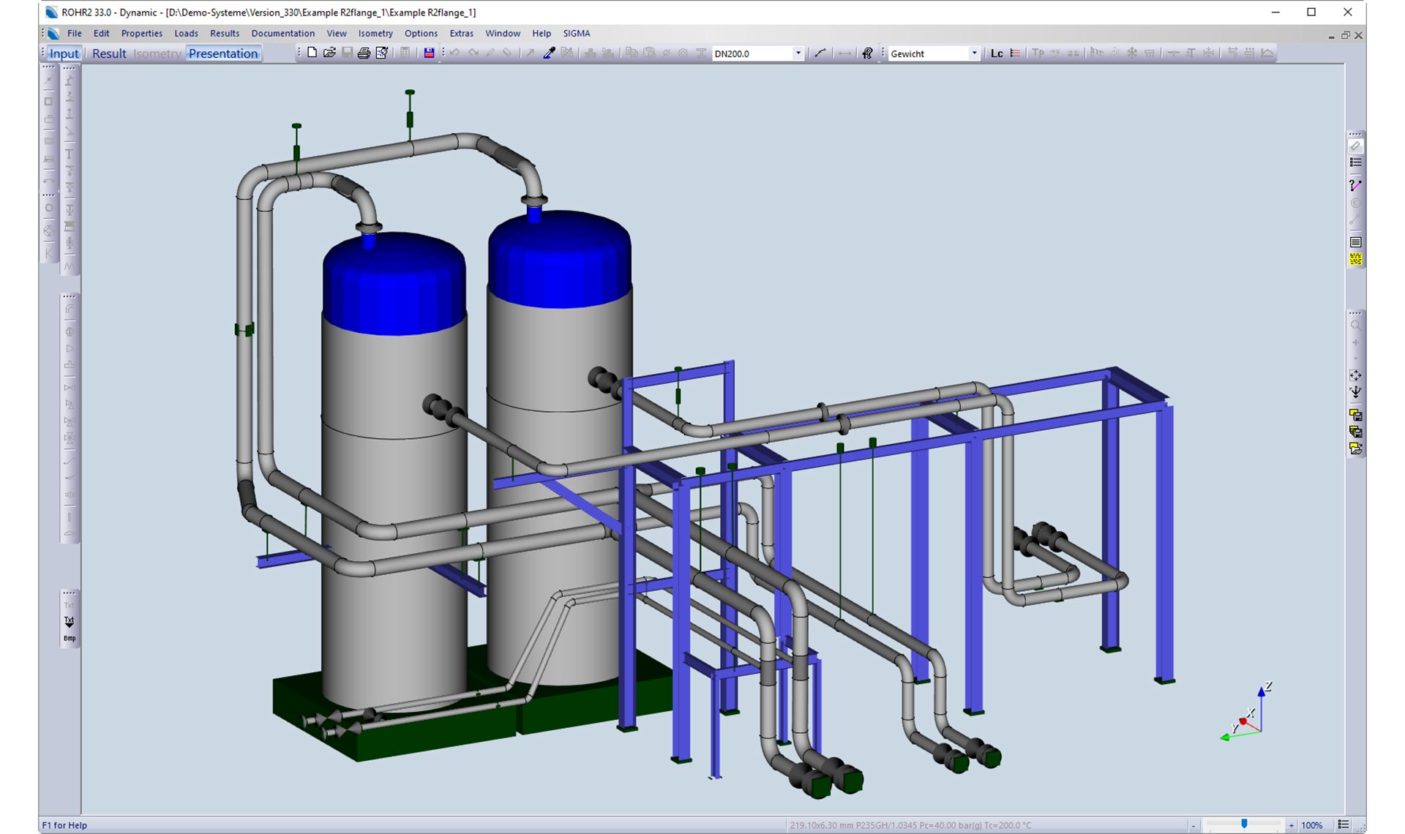
System modelling
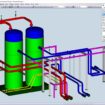
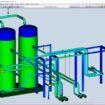
Creation and three-dimensional visualization of piping, components, supports, and steel structures connected to the calculation model.
Property control
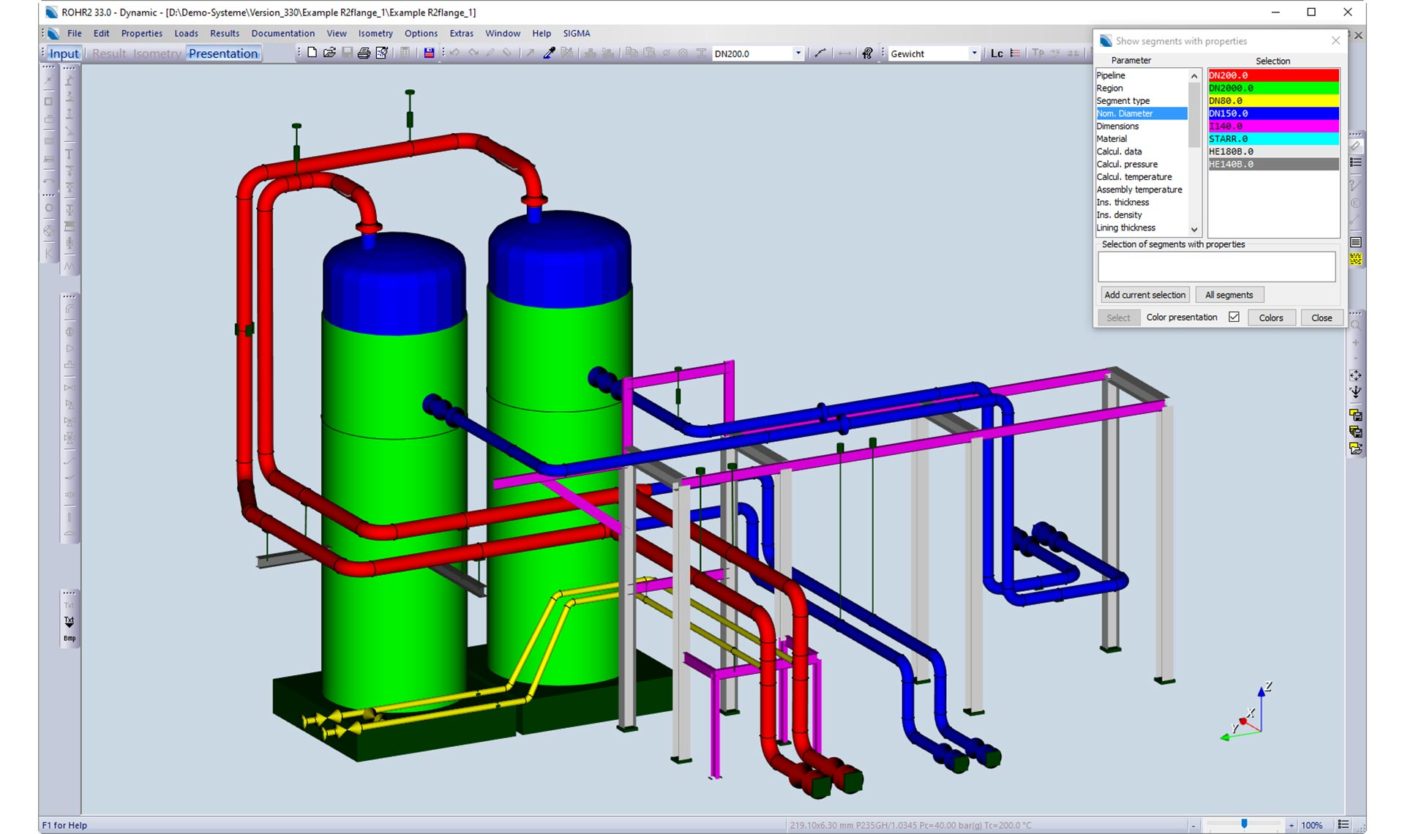
Segments and components can be colour-coded to quickly verify assigned dimensions, materials, and calculation data.
Stress analysis
Verification results are displayed directly on the model, making it easier to identify the areas subjected to the highest stresses.
CAD/CAE integration
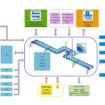
Interfaces connect ROHR2 with leading CAD, CAE, and calculation systems, simplifying data exchange and documentation production.
Caratteristiche
- Graphical 3D modelling
- Static analysis
- Dynamic analysis
- Seismic analysis
- Water hammer analysis
- Automatic load case combinations
- Calculation of support loads
- Calculation of nozzle loads
- Internal pressure analysis
- Nozzle analysis with ROHR2nozzle
- Generation of isometrics and parts lists
- Calculation of eigenvalues and mode shapes
- Verifications according to ASME, EN, ISO 14692, KTA, CODETI, RCC-M, and DVS 2210
- Management of nonlinear conditions such as friction, gaps, and support uplift
- Data import and export through integrated CAD and CAE interfaces